February 3rd, 2010, posted by Annie Leonard

I’m working today on the forward to the German edition of the Story of Stuff book, which will be published soon after the U.S. version comes out next month (pre-orders available via Powell’s Books, Barnes & Noble, and Amazon)

    The Story of Stuff film has already been translated into German and we’ve received thousands of emails from people in Germany who liked it. Some also sent us  examples of German films which address the same issues we explore in Story of Stuff. Here’s one with English subtitles and another translated into English to see how they’re talking about issues of consumption, resource use and equity in the German context.

    Please check out the videos below and share with friends in Germany. And if you live in Germany yourself, check out the Story of Stuff book later this spring.


    The Bill by Germanwatch from EcoEquity.com


    Beyond Climate Change – Flow by the Sustainable Design Center

    January 18th, 2010, posted by Annie Leonard

    Today is the official Martin Luther King Day in the United States, chosen to commemorate Dr. King’s birthday, which is actually January 15th. In the U.S., it’s a real federal holiday, with banks and post offices and schools closed to honor this outspoken advocate for social justice.

    Last Friday, the final school day before Martin Luther King Day, I passed a multi-ethnic group of school children, holding signs with King’s face in one hand and holding another child’s hand in the other.  Led by their teacher, they were sweetly marching down Martin Luther King Way in downtown Berkeley.  Last Wednesday, I went to an event at Martin Luther King Middle School, a beautiful school with top notch facilities and programs led by racially diverse staff for its racially diverse student body.  At my daughter’s school, a visiting 7 year old student from Italy, whose English was not quite fluent, stood up and recited the some lines from King’s “I have a dream” speech which, he said, is studied in Italian grade schools. Wow, “I have a dream” in Italian grade schools? Black and white kids holding hands and walking down a major street named after Martin Luther King? An excellent public school, even named after Dr. King, for kids of all colors?  A visitor to parts of this planet, if staying only briefly, might think we’ve overcome racism and social injustices since the time of Martin Luther King.

    I wish it were so. Sadly, on so many fronts – including the environment – we have far to go.

    When it comes to the distribution of environmental goods and harm, huge disparities still exist between communities of people with white skin and those with skin that isn’t white.

    This reality, often called environmental racism, was first brought to national attention in the U.S. though the groundbreaking report, “Toxic Waste and Race in the United States,” published by the United Church of Christ in 1987. This was the first study to solidly document that race is the most significant factor when siting hazardous waste facilities nationwide.  Race. Not geological stability or proximity to groundwater or any number of other criteria we might think would top the list when figuring out where to put a toxic waste site. The data in this report – for example, evidence that showed that three out of every five African-Americans and Hispanic Americans lived in communities with uncontrolled toxic waste sites – was shocking.

    But you know what is even more shocking?  In the past twenty years, the problem hasn’t been solved and, in some cases, is getting worse!

    In 2007, twenty years after the release of the first report, the UCC released Toxic Waste and Race at Twenty, 1987 – 2007, which said: “Race continues to be an independent predictor of where hazardous wastes are located, and it is a stronger predictor than income, education and other socioeconomic indicators. People of color now comprise a majority in neighborhoods with
    commercial hazardous waste facilities.”

    The fact that 20 years later, environmental racism persists and, in fact, has increased is shameful.  Of course, the answer to environmental racism is not some sort of “equitable pollution” in which we all share the toxic burden equally; the answer is to clean up our production processes and environmental governance so that no one-regardless of age or race or income, regardless of if they are living now or in generations to come-has to subsidize toxic processes and products. Period.

    Martin Luther King said, “In the End, we will remember not the words of our enemies, but the silence of our friends. “

    I’d like to suggest that today not be a day off, but a day on . A day on which we devote extra time to ending the silence about environmental racism and join the growing global movement for environmental justice. Read the United Church of Christ’s Toxic Waste and Race reports and tell your friends, your neighbors, write to your local paper and elected officials. Let’s make sure that another twenty years doesn’t pass with this injustice unstopped.

    Dr King also said “We must work unceasingly to uplift this nation that we love to a higher destiny, to a higher plateau of compassion, to a more noble expression of humanness.”  That higher destiny must include a healthy and safe environment for all people, regardless of their income, race, religion, or really anything.

    There are many organizations in the United States, as well as around the world, working to promote environmental justice and to transform production process away from toxic chemicals. To find some organizations near you, check out the list at Story of Stuff and call one to find out how you can get involved.

    December 16th, 2009, posted by Christina M. Samala

    Filmed live in Copenhagen on Dec 15, a segment on cap and trade from Democracy Now! Featuring clips from The Story of Cap & Trade and a debate with Larry Lohmann and Fracnk Ackerman.

    Larry Lohmann is author of the book “Carbon Trading: A Critical Conversation on Climate Change, Privatization and Power”.  He works at the British NGO The Corner House.

    Frank Ackerman is an economist at the Stockholm Environment Institute and author of “Can We Afford the Future?: The Economics of a Warming World”.

    December 3rd, 2009, posted by Annie Leonard

    I want to pause in the midst of the much needed debate about climate change solutions, as I do every December 2nd -3rd to remember Bhopal.

    Last night was the 25th anniversary of the disaster in Bhopal, India,  where a Union Carbide  pesticide plant released 27 tons of toxic chemical into a crowded sleeping city, killing 8,000 immediately and injuring over a half a million people. It is widely recognized as the world’s biggest industrial chemical accident ever.

    I’ve been to Bhopal, where survivors told me stories of waking in the night, feeling a fierce burning in their eyes and throat. First some thought neighbors were burning chilies. Others thought the day of reckoning had come. In the middle of the night, thousands started running. People were trampled, children lost, thousands injured and killed.

    The disaster started that night 25 years ago and it continues to this day:

    Unbelievably, after 25 years, the company still refuses to share its information on the toxic health impacts of the leaked gas, calling it a “trade secret,” thwarting efforts to provide medical care to victims of exposure. The abandoned Union Carbide factory, now owned by Dow Chemical, still sits there, leaking hazardous chemicals and waste left behind in the aftermath of the disaster, poisoning the next generation of Bhopalis.

    Yesterday, as on every anniversary, the gas survivors marched in Bhopal demanding health care, clean water, justice and an end to the toxics-based industrial production model in widespread use today.

    The survivors aren’t just asking for environmental health and justice for their community but for every community. Their slogan – No More Bhopals – means no more Bhopals there or anywhere. No more toxic chemical poisoning.  No more writing off whole communities as disposable. No more sacrificing people and the planet for business as usual.

    As Bhopal survivor Rashida Bee said: “We are not expendable. We are not flowers offered at the altar of profit and power. We are dancing flames committed to conquering darkness and to challenging those who threaten the planet and the magic and mystery of life.”

    So today I pause, remember and renew my resolve to keep working towards a world with No More Bhopals.

    December 2nd, 2009, posted by Annie Leonard

    Now that’s a discussion!

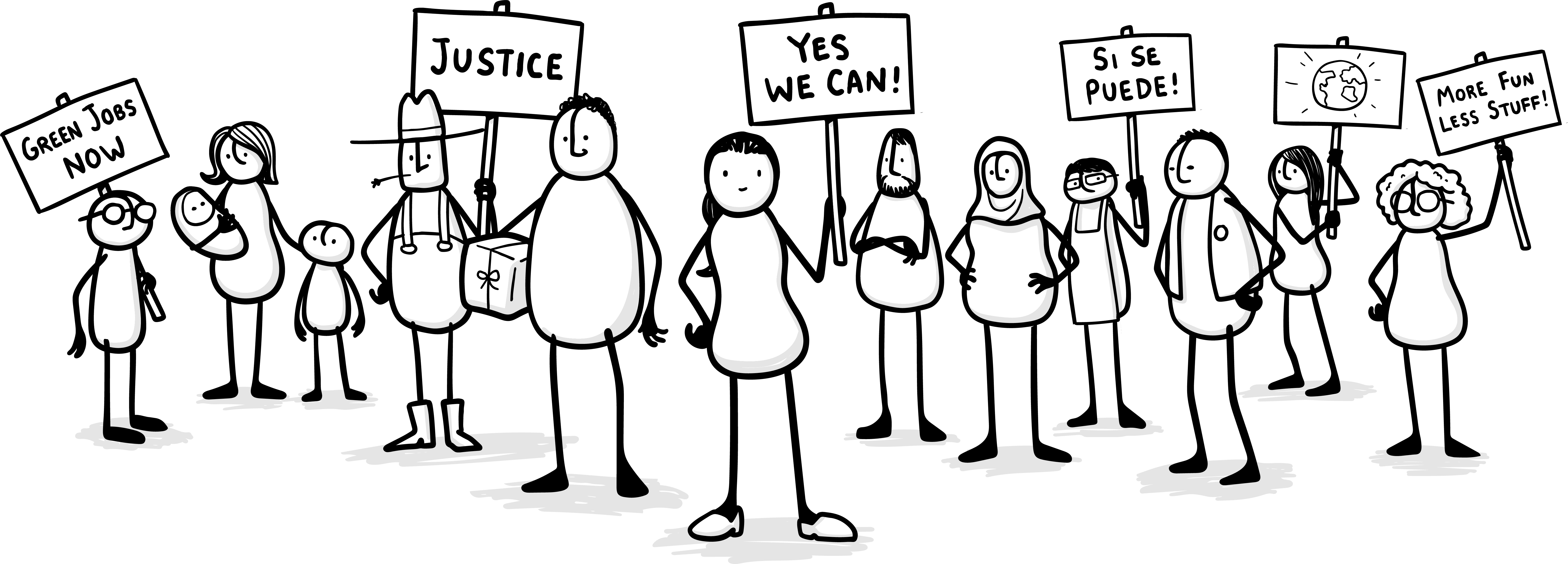
    On blogs and listserves, in living rooms and classrooms around the country today, people are talking about, debating, and yes, critiquing our new short film.

    We made The Story of Cap & Trade to encourage a real discussion about how to solve the enormous climate challenges we face. If there was ever an issue that merited broad, even heated public debate, this is it. I’d far rather people argue about cap and trade and other policy options than ignore them or silently go along with the crowd, even when our guts tell us the solution on the table is inadequate.

    We’re at a defining moment here. Defining in terms of planetary survival. Defining in terms of the kind of democratic governance we have in this country.

    In doing my research for The Story of Cap & Trade, I heard many longtime trusted friends tell me “I know cap and trade isn’t enough, but it is the best we can get in this political climate” or “we can’t get something stronger past business.”

    Excuse me, but who is running this country? The people or the coal companies? You and me or Goldman Sachs? Remember 1 person, 1 vote?

    The entire planetary ecosystem and the lives of billions of people are at stake, and we’re accepting the conventional wisdom that we can’t get a real solution past big business? That it’s too late? That the train has left the station?

    Interestingly, the U.S. Climate Task Force and Future 500 just released the results of a new poll by Hart Research that found Americans favor a carbon tax over cap and trade by a margin of two to one. The poll found support for a tax over cap and trade in all age and income brackets. It also found support for cap and trade was lower among those who paid the most attention to climate issues.

    Dr. Elaine Kamarck, a former senior policy advisor to Al Gore and current Co-chair of the Climate Task Force explained that:

    “This poll reveals that only two percent of voters hold very positive view of cap and trade – the system at the core of the current Senate bill. But it’s not too late to salvage the situation. With both the U.N. and the Senate delaying major climate debates until next year, policymakers now have time to make a serious course correction in the emissions debate.”

    If there is public support for a strong law to cap and tax carbon pollution, why are our leaders advancing weaker and riskier schemes that rely on the market to solve the problem?

    It’s business as usual.

    Now, I’m not against business. In fact, I am thrilled by the environmental and social innovations of many businesses today and I am a firm believer that businesses have to be part of the solution as we transition to a sustainable and just economy.

    But let’s admit it, some companies just aren’t hip to that program. Some are more about protecting the bottom line than then planet.

    If there was ever a time to draw a line in the sand, to say we’re not compromising our future and the planet to protect business as usual, this is that moment.

    Enough of accepting ‘better than terrible.’

    The stronger the demands for real solutions – solutions that achieve ecological sustainability and do so fairly – the easier it will be for those in the political process to inch in that direction too. Let’s continue this discussion, welcome the voices of those most impacted by climate change, invite in businesses that are serious about sustainability and encourage our leaders to lead.

    This is a defining moment.

    November 30th, 2009, posted by Annie Leonard

    If you’re like me, an increasing amount of your worries these days focus on the rising levels of CO2 in the atmosphere and the resulting potential for devastating climate chaos.

    Years ago, when I first heard about climate change, I figured someone else would work all that out while I kept plodding away with my work on consumption, pollution and waste. Well, guess what? They didn’t work it out; in fact, the climate situation is far worse today than even recent scientific predictions. And guess what else? It turns out that climate and consumption are actually the same issue.

    You see, most of the greenhouse gases countries emit come from our materials economy: the way we make, use, transport, and throw away all the stuff in our lives. As Boston College professor (and one of my favorite authors) Juliet Schor said “Global consumerism devours resources like there’s no tomorrow. And unless we address how much we consume, we won’t succeed in averting disastrous climate change.

    A majority of scientists now say we need to significantly reduce carbon levels in the atmosphere if we want the planet to resemble something close to what it is like today, supporting the kind of life that it does today. To do this, we simply have to use less Stuff – especially oil and coal. We have to rethink, redesign and rebuild a lot of things. We have to figure out different modes of transportation, growing food, building buildings, and having fun that don’t require endless new Stuff. It’s very possible to make these changes, but they won’t happen on their own. We need to get started.

    Unfortunately, most of the world’s leaders and big businesses are instead promoting policy approaches that don’t bring us anywhere near the level of change that climate scientists say is needed—let’s call these “false solutions.” And there’s another problem with these policy approaches: the details are so technical and policy wonkish that it’s often hard to figure out what they are even talking about.

    I wondered if it would be possible to explain the leading false solution, Cap and Trade, in a clear compelling way so that more of us are inspired to join the conversation. Working with Climate Justice Now!, the Durban Group for Climate Justice and Free Range Studios, we produced our new short film, The Story of Cap and Trade, to do just that.

    We hope you like it. And more importantly, we hope it inspires you to get involved in the most important conversation of our lives.

    November 25th, 2009, posted by Annie Leonard

    Those of us in the U.S. are wrapping up our work weeks today to spend tomorrow with friends and family, gathered around big home cooked meals and giving thanks.

    Yes, I know that the history of this particular holiday is not nearly as charming as our children’s schoolbooks portray, but for many, the gathering isn’t about participating in a fabricated historical tale, but is about pausing in our hectic lives and honestly sincerely giving thanks for those things which make our lives sweeter throughout the year:  our friends,  our family, our community and our work to make world a better place.

    Unfortunately, many people across the country leave their home Thanksgiving night to sleep in cold parking lots and line up at stores to participate in the consumer frenzy known as Black Friday, the biggest shopping day of the year. Retailers know that the Friday after Thanksgiving is the only weekday that many people will have off from work until Christmas, so they widely advertise rock bottom prices to lure people away from their friends and families to go shopping. Adbusters has declared November 27th in the U.S. and 28 November internationally Buy Nothing Day and calls upon us all to restrain from holiday shopping, or from any shopping as well as to unplug our TVs, leave the cars in the garage, and  “from sunrise through sunset, we’ll abstain en masse, not only from holiday shopping, but from all the temptations of our five-planet lifestyles.”

    Last year’s Black Friday hit a new low.

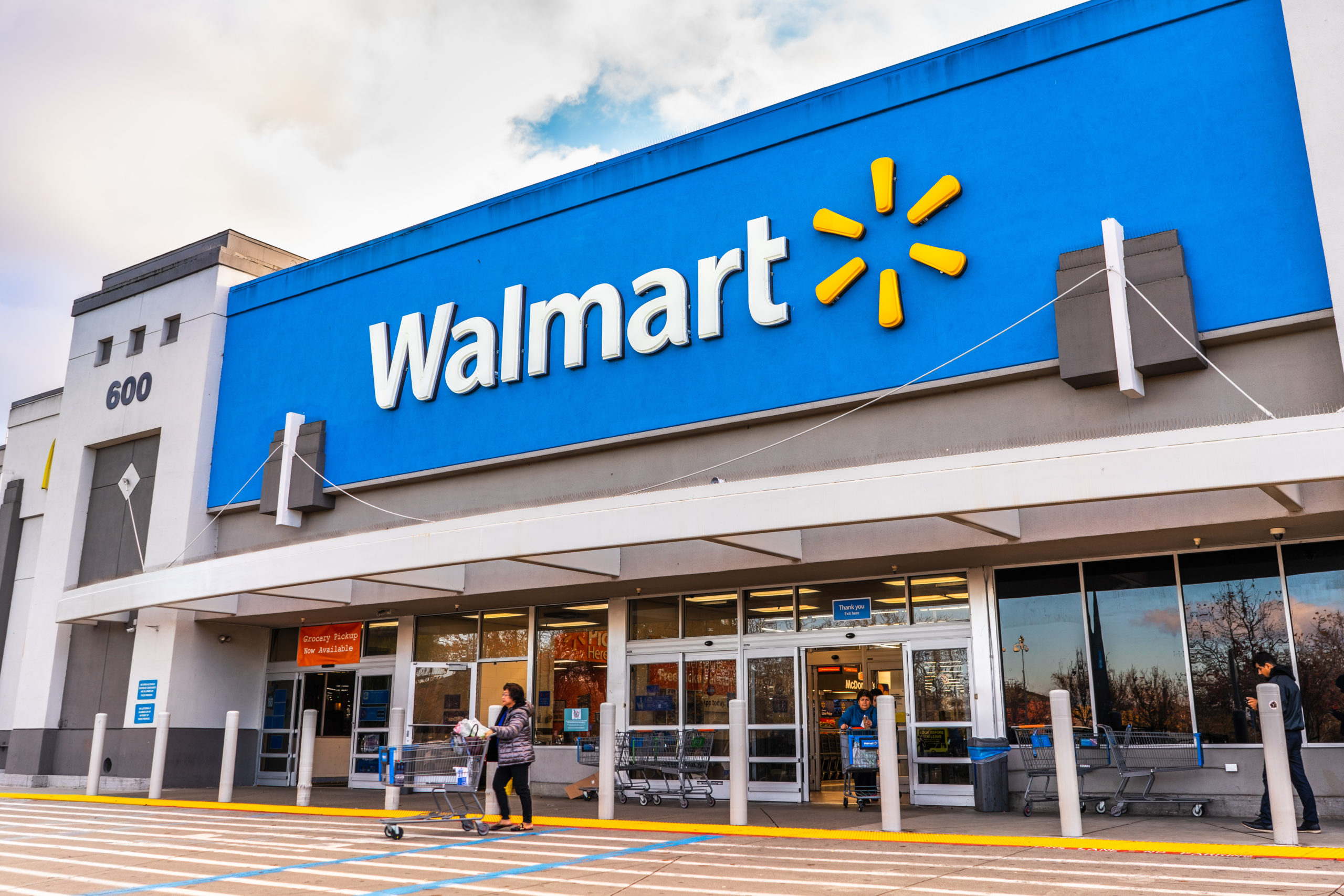
    Jdimytai Damour, a 34 year old man from Haiti, was working as a temporary worker at a Wal-Mart in New York State.  At 5:00 am, when the store was scheduled to open, the crowd of shoppers who had been waiting in line in the cold for up to 8 hours, stormed the door and trampled Jdimytai to death.

    I think of Jdimytai with every advertisement that I’ve seen urging me to go shopping early on Friday morning. And I’ll be thinking of him as I instead linger around our dinner table, crowded with friends, and when I spend a welcome Friday off of work playing board games and making art projects with the kids and doing any number of things that will be infinitely more fun than sleeping in a cold parking lot to be first in line at the mall.

    I hope you’ll do the same.

    Happy Thanksgiving.